
How LED Filament Bulb Heat Management Affects Lifetime and Reliability
Practical product, application and sourcing guidance for B2B lighting buyers.
← BACK TO JOURNALLighting engineering note
01Heat management is the quiet factor behind filament bulb lifetime.
For OEM and ODM buyers, thermal design is not just a performance detail. In LED filament bulbs, it influences lumen maintenance, color stability, driver stress, and the consistency your customers experience over time.
Lower internal temperatures generally reduce stress on LEDs and driver components, helping the lamp hold performance longer.
Stable thermal paths help limit premature failures caused by heat concentration inside the bulb envelope.
A well-managed thermal design supports fewer returns, steadier field quality, and more predictable sourcing decisions.
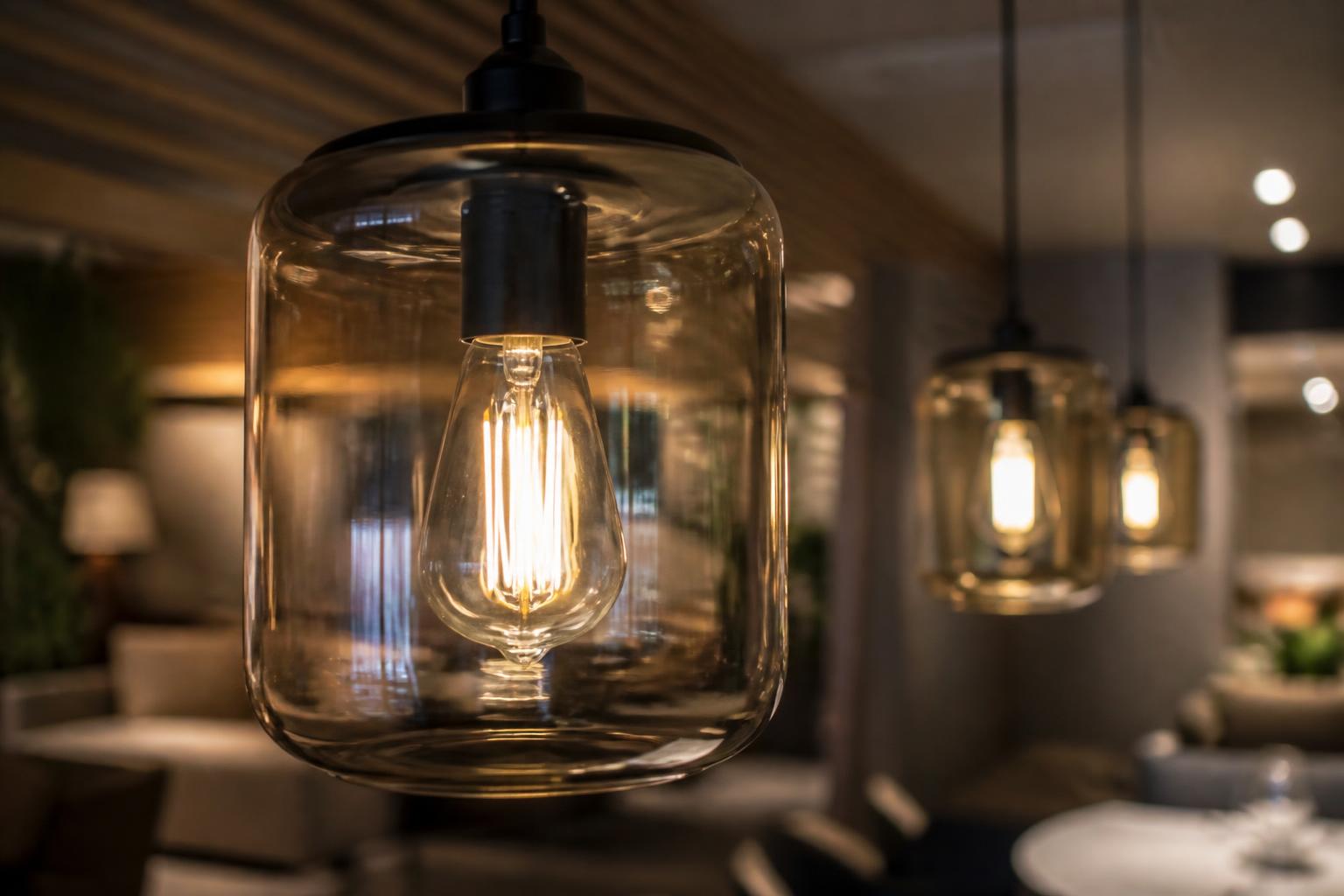
A calm concept visual showing heat moving away from the filament zone and the envelope.
Reliability note
02Wattage does not decide lifetime by itself. Heat does.
In LED filament bulbs, the difference between a stable long-running product and one that ages early is usually thermal behavior under real use. A bulb can look efficient on paper and still lose output, shift color, or stress its internal components if heat is not guided away cleanly from the filament structure, driver, and enclosure.
For OEM and ODM programs, that makes thermal design a reliability decision, not a cosmetic one. The right answer is not simply lower wattage; it is a balanced build that manages temperature rise consistently across the full operating life.
Discuss OEM thermal prioritiesEngineering note
03Heat leaves the filament bulb through more than one path.
In an LED filament bulb, reliability is not only about the LED strip itself. Heat must travel away from the filament area, the internal driver, and the enclosed bulb envelope at the same time. If any of those paths is weak, the whole lamp runs hotter than intended and lifetime risk rises.
For OEM and ODM projects, the practical question is simple: can the bulb move heat out fast enough under real use conditions, not just in a lab sample? A stable design keeps temperature rise controlled at the filament mount, avoids driver stress, and reduces heat soak inside the glass or plastic envelope.
What buyers should look for
- Consistent thermal path from filament to base and internal support parts
- Driver placement that avoids trapping heat near sensitive components
- Envelope design that allows the bulb to cool naturally in normal fixtures
That is why two bulbs with similar wattage can behave very differently in the field. The better design is not simply “cooler”; it is more balanced, with fewer hot spots and less long-term stress on electronics and adhesives.
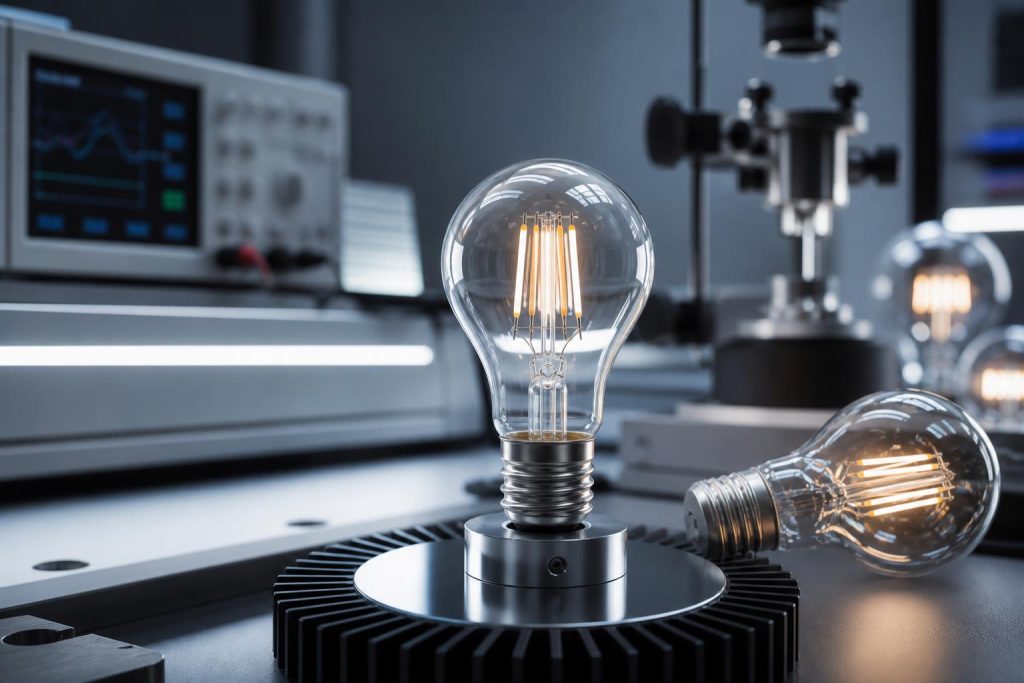
Main heat paths
A simple view of where heat accumulates and where it should escape.
Light-emitting filament strips create the first hot zone. Good thermal contact and spacing help keep that heat from building up around the filaments.
The driver benefits from airflow and separation from the hottest parts of the lamp, since sustained heat accelerates stress on electronic components.
The shell can only release heat gradually. A compact, enclosed fixture can slow this process and raise the operating temperature inside the lamp.
For sourcing teams: ask for thermal testing conditions, fixture assumptions, and lifetime targets that match your actual application. That is the fastest way to separate a promising sample from a durable production design.
Request OEM supportOEM reliability checklist
04Heat risk is rarely one thing. It is the combination of environment, enclosure, and airflow.
For LED filament bulbs, the lifetime story is usually decided by how well the lamp can move heat away from the LED filaments and driver area. The comparison below helps specifiers spot the conditions that quietly shorten service life, raise failure rates, and increase warranty pressure.
Installation reality
05Heat management depends on where the bulb lives.
A decorative LED filament bulb can look effortless in an open pendant, yet the same bulb may run hotter inside a shaded sconce, tight hospitality fixture, or enclosed retail display. For OEM and ODM buyers, lifetime is not only a lamp issue; it is an installation issue.
- Limited airflow raises internal temperature and can shorten useful life.
- Warm ambient spaces make the fixture work harder to shed heat.
- Enclosure geometry affects how quickly heat escapes from the bulb body.
Practical takeaway: verify the intended fixture environment early, then align bulb construction, thermal margin, and application guidance before mass production.
Check whether the fixture is open, semi-enclosed, or decorative-only before approving the bulb for the project.
Match the product story to the installation environment so customers understand where the lamp is likely to perform best.
Build thermal expectations into the application note, not only into the datasheet.
For OEM/ODM projects, validate the fixture type, ambient heat, and ventilation conditions before finalizing the bulb specification.
Request a quoteOEM BUYER CHECKLIST
06Before you approve a filament bulb for production, check the heat path first.
For LED filament bulbs, thermal reliability is not only about the bulb itself. Buyers should verify the fixture environment, the stated ambient limit, sample-aging behavior, and how marketing claims are framed before committing to volume.
- Confirm fixture compatibility. Open, semi-closed, and enclosed luminaires can create very different thermal loads. Make sure the intended lamp position matches the real installation environment.
- Review the ambient temperature limit. Ask for the rated operating range and compare it with the customer’s site conditions. If the application runs warm, build in margin rather than assuming room-temperature performance.
- Inspect sample aging results. Use early samples to check lumen stability, color shift, and any visible darkening or drift after burn-in. Short-term evaluation often reveals heat issues before mass production does.
- Check driver placement and heat isolation. Whether the driver sits in the base, stem, or another compact area, look for separation from the hottest internal zones so heat is not trapped in one small cavity.
- Ask how claims are packaged. Lifetime, dimming, and performance claims should be stated with clear test conditions. If the claim depends on a specific fixture or ambient condition, keep that context in the purchase file.
- Verify packaging and transit protection. Heat-related reliability also starts with handling. Confirm that cartons, inserts, and storage instructions protect the bulb from unnecessary thermal and mechanical stress before installation.
FAQ
07AromaLight FAQ
Practical answers for evaluating industrial aroma lighting suppliers, with a focus on fit, compliance, and project readiness.
What should I verify before shortlisting a supplier?
Confirm application fit, available customization, quality documentation, delivery consistency, and whether the supplier can support your required volume and timeline.
How do I compare supplier quality?
Compare material control, process discipline, inspection records, and whether the supplier can provide clear specifications and traceable production details.
Why is customization important?
Customization helps align the solution with your environment, branding, and installation needs, which reduces redesign effort and improves project efficiency.
What should a supplier checklist include?
Use a checklist that covers requirements review, sample confirmation, documentation, lead time, after-sales support, and the supplier’s ability to maintain consistent output.
Supplier checklist
Request a structured review of your requirements before moving forward.
Contact supplier08Buyer Questions
These answers highlight how heat management affects LED filament bulb lifetime and reliability.
Why does heat management matter in LED filament bulbs?
Heat management matters because lower internal temperatures generally reduce stress on LEDs and driver components, helping the bulb hold performance longer. In LED filament bulbs, thermal design influences lumen maintenance, color stability, driver stress, and the consistency customers experience over time.
Does wattage alone determine bulb lifetime?
No. Wattage does not decide lifetime by itself; heat does. A bulb can look efficient on paper and still age early if heat is not guided away cleanly from the filament structure, driver, and enclosure under real use conditions.
What thermal factors should OEM buyers verify?
OEM buyers should verify fixture compatibility, ambient temperature limits, driver placement, heat isolation, and sample-aging behavior. Testing should reflect the actual fixture geometry, ambient condition, and duty cycle expected in the field, not only a lab sample.
How do enclosed fixtures affect reliability?
Enclosed or semi-enclosed fixtures can trap heat around the bulb when air cannot exchange freely, which raises internal temperature and increases lifetime risk. In those cases, lumen depreciation, color shift, and driver stress are more likely unless the design has enough thermal margin.
What is the practical takeaway for sourcing teams?
The practical takeaway is to treat thermal structure as a sourcing decision from the first sample, not only at final approval. Buyers should request thermal testing conditions, fixture assumptions, and lifetime targets that match the real application before release.
09Ready to take the next step?
- Review the offer details
- Confirm fit for your team
- Send your inquiry to get started
Looking for a Product, Not Just Information?
Explore AromaLight LED filament bulb models or send us your specifications, reference photos and OEM / ODM requirements.