
How LED Filament Bulbs Manage Internal Heat
Practical product, application and sourcing guidance for B2B lighting buyers.
← BACK TO JOURNAL01How LED Filament Bulbs Manage Internal Heat
LED filament bulbs do not manage heat by one single trick. In some designs, the glass bulb is filled with inert gas, and that gas helps move heat away from the filament zone more effectively. The heat then travels toward the glass shell and is released through the outer surface.
This internal heat path helps the filament work at a more controlled temperature, which supports steadier operation, better long-run stability, and longer service life. For decorative or visible-lamp applications, that matters because the bulb must look good and stay reliable at the same time.
Heat control is also why aging tests matter. A bulb can look fine in a short power-on check but still show weak spots during continuous operation. Burn-in testing helps reveal issues such as unstable brightness, abnormal flicker, intermittent operation, poor electrical connection, or early driver failure before shipment.
A calm internal path helps heat move outward instead of lingering around the working filament.
Internal transfer helps the bulb shed heat in a more controlled way.
Better thermal behavior supports steadier light output.
Continuous running helps expose early failures that brief tests can miss.
Always judge the bulb in the intended operating environment.
What buyers should do next
When comparing LED filament bulbs, look beyond the instant glow. Ask how the lamp moves heat inside the bulb, whether its structure supports stable continuous operation, and whether the sample has passed a meaningful aging review. That is the clearest way to separate a lamp that simply turns on from one that is ready for dependable use.
If you are planning a project, start with the thermal path first, then confirm the sample under real fixture conditions.
02Heat Path, Temperature Control, and Long-Run Stability
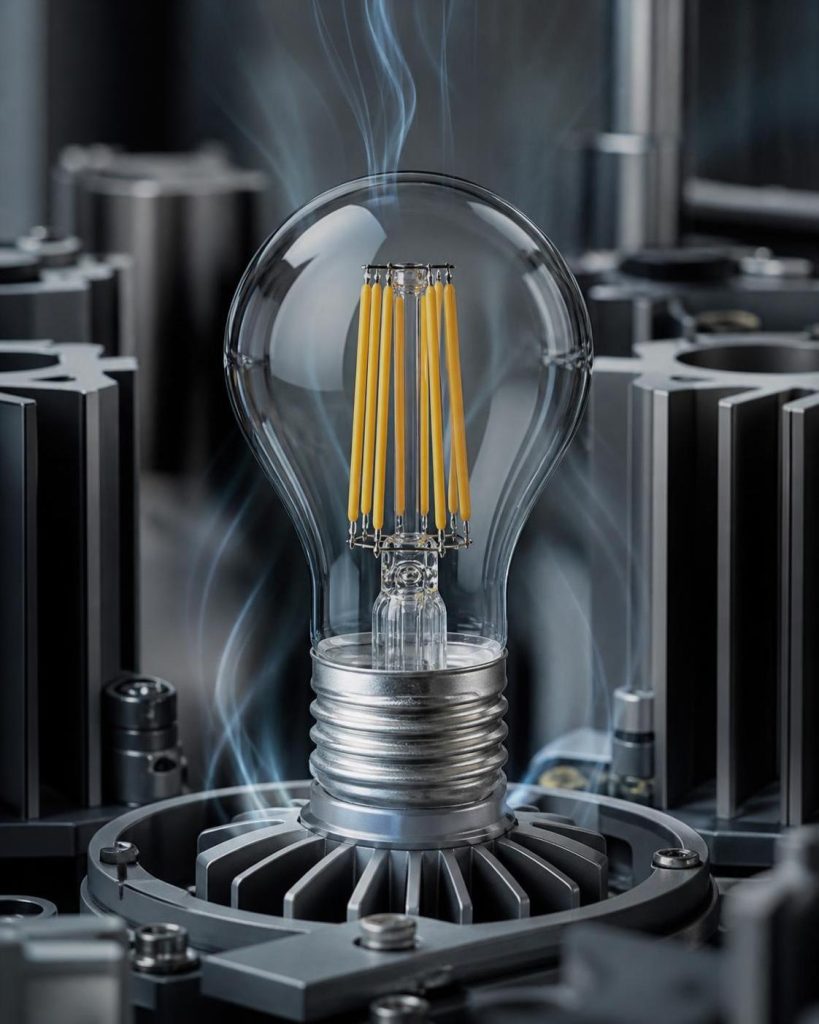
LED filament bulbs manage heat through the full bulb structure, not by one single “cooling trick.” In some designs, the heat generated at the filament area is helped outward through the bulb’s internal gas and then released through the glass envelope. That internal route matters because temperature control is closely tied to stable output and longer-term reliability.
When the bulb is running continuously, the question is whether heat can move away from the working filament at a steady pace. If the thermal path is balanced, the filament area stays easier to control, the glass surface can shed heat more effectively, and the lamp is less likely to drift into unstable operation over time.
The bulb’s internal gas, glass envelope, and continuous operating conditions all affect how smoothly that heat path works.
Filament heat forms first
The LED filament is the first place where localized heat appears during operation. If that heat stays concentrated too long, the bulb’s working temperature becomes harder to manage.
Internal gas can help transfer it
In some filament bulb structures, inert gas inside the glass envelope participates in heat transfer, helping move thermal energy from the filament zone toward the bulb wall more effectively.
Glass releases heat outward
Once heat reaches the glass shell, it disperses through the surface into the surrounding air. That outward release is part of the bulb’s natural thermal balance.
Why this matters in real use
A good heat path supports a more controlled filament temperature, which is helpful for long-run stability and service life. That is especially important in decorative or visible-lamp applications where the bulb may run for long periods and the installation environment may not offer much airflow.
This is also why a quick power-on check is not enough on its own. A lamp can light normally for a moment and still reveal unstable brightness, flicker, intermittent operation, or driver-related issues only after it has been running continuously.
Aging tests help expose early failures before shipment by observing electrical stability, light-output stability, driver behavior, and filament condition under continuous operation.
Practical takeaway for buyers
When evaluating a filament bulb, look past the initial glow and ask how heat is moving through the whole lamp. The best result comes from a complete thermal path: filament, internal gas where applicable, glass envelope, and the real fixture environment working together.
03Quick Technical Answers
This guide explains how LED filament bulbs move heat away from the filament area and why aging tests matter.
How do LED filament bulbs move heat away from the filament area?
They move heat from the filament zone toward the glass shell, and in some designs inert gas inside the bulb helps transfer that heat more effectively. The glass surface then releases heat to the surrounding air. This internal path supports more controlled filament temperature and steadier long-run operation.
Why does inert gas matter in some LED filament bulb designs?
In some bulbs, inert gas is part of the internal heat-transfer path. It helps move thermal energy away from the filament area toward the glass wall, instead of letting heat stay concentrated around the working filament. That can improve operating stability and support longer service life, but it is not the only thermal factor.
Why are aging tests important for LED filament bulbs?
Aging tests help expose early failures that a short power-on check can miss. By running the bulb continuously, manufacturers can observe electrical stability, light-output stability, driver behavior, filament condition, and issues such as abnormal flicker, unstable brightness, intermittent operation, poor connection, or early driver failure before shipment.
Does passing an aging test guarantee long life?
No. Passing aging testing confirms operating stability during the test window, but it does not promise unlimited lifetime. The purpose is to screen out weak units and verify that the bulb stays stable under continuous operation before it reaches the customer.
04Move from theory to a reliable sample check

Looking for a Product, Not Just Information?
Explore AromaLight LED filament bulb models or send us your specifications, reference photos and OEM / ODM requirements.