
How to Choose LED Filament Bulb Glass Finishes
Learn how clear, amber, frosted, and smoked LED filament bulb glass finishes change the look of decorative lamps and OEM lighting projects.
← BACK TO JOURNALBuying Guide · Glass Finish Selection
The same LED filament bulb can feel discreet, warm, or highly decorative depending on the glass finish. For OEM and project work, that choice affects how the lamp looks on shelf, in the fitting, and in the final space.
Choose a finish that supports the visual role of the lamp, not just the light output.
Use finish consistency to create a recognizable product family across SKUs.
Balance diffuser effect, filament visibility, and fixture compatibility before locking the spec.
The best finish is the one that matches the fixture geometry, the viewing distance, and the brand position you want customers to remember.
Most direct filament visibility and the brightest decorative presence.
Warmer visual tone with a softer, more nostalgic impression.
Reduced glare and a calmer look for hospitality and residential use.
Finish categories
01How each glass finish changes the bulb’s visual character
Glass finish is not just a cosmetic choice. It controls how much the filament is revealed, how softly the bulb reads in the fixture, and whether the lamp feels more retail-friendly, hospitality-ready, or clearly product-forward for OEM branding.
A simple way to decide
Choose the finish by asking one question: should the bulb itself become part of the decor, or should it disappear slightly so the fixture and filament effect do the talking?
- Clear: highest visual sparkle and strongest filament visibility.
- Amber: warmer, moodier, and more decorative at the source.
- Frosted or opal: softer, calmer, and better at reducing lamp glare.
- Smoked or tinted: more dramatic and brand-led, but usually less bright-looking.
The right finish often depends on whether the bulb is seen in a pendant, chandelier, wall sconce, retail display, or a photographed product line.
Quick comparison
Visual tradeoffs at a glance
Best when the filament design should stay visible and the bulb needs a crisp, classic decorative look.
AmberBest when you want a warmer glow impression and a more nostalgic, atmospheric presentation.
FrostedBest when the goal is a softer lamp presence and a calmer reading in close view or cluster installs.
SmokedBest when the bulb should feel more architectural, premium, or visually deliberate in the fixture.
Application fit
02See where each finish earns its place in real interiors
The right glass finish should support the room’s mood, the fixture’s visibility, and the brand story. In hospitality, retail, and home-decor settings, the finish often matters as much as the bulb shape itself.
- Clear: best when the filament detail should stay visible and the lamp is part of the design.
- Amber: ideal for warmer, softer scenes that feel relaxed, premium, and intimate.
- Frosted: useful when glare control and even, calmer output matter more than bulb texture.
- Smoked: suited to moody, decorative concepts where the bulb reads as a styling element.
For OEM programs, start with the interior concept, then choose the finish that best matches the fixture visibility, target price position, and expected atmosphere.
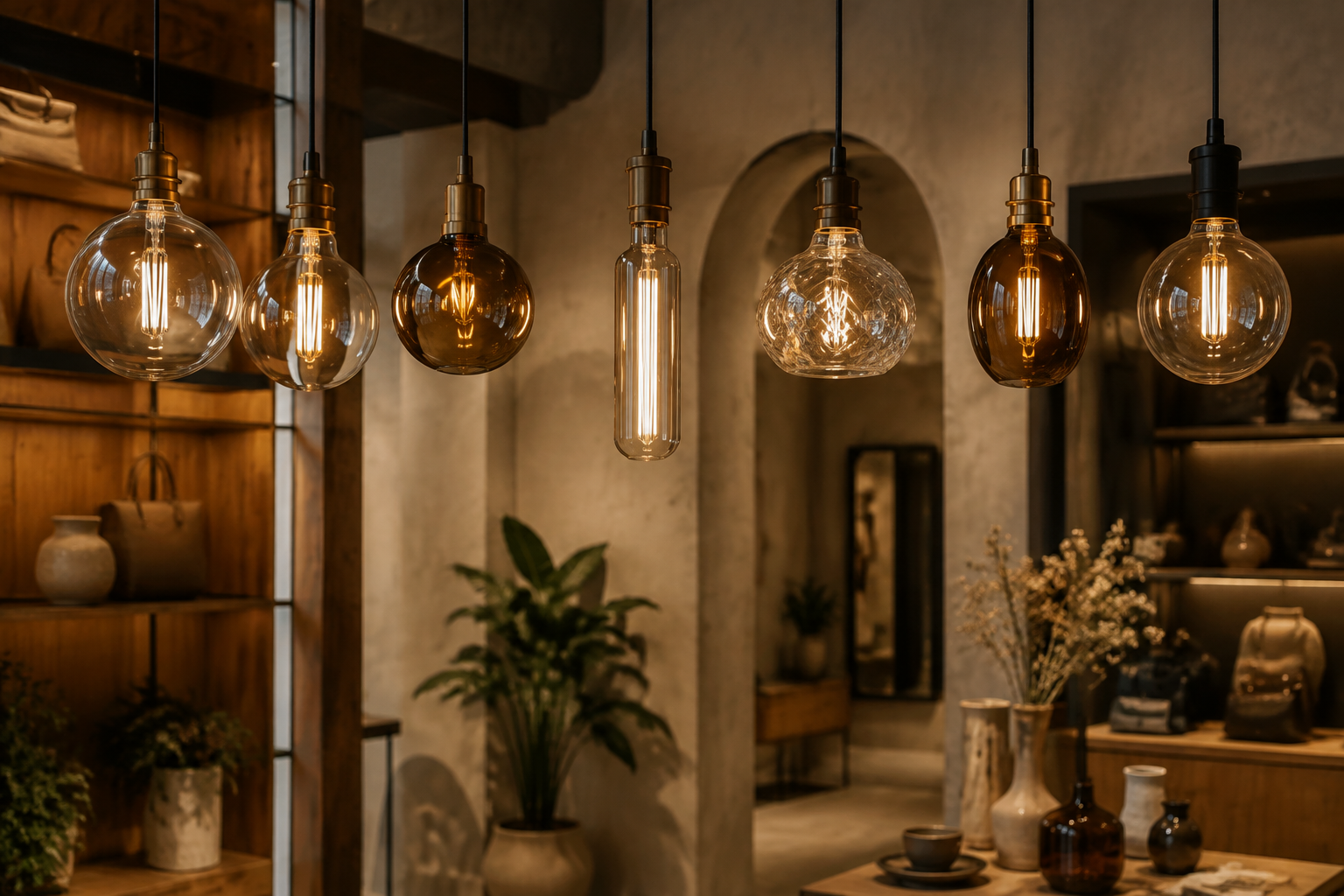
OEM selection matrix
03Use finish choice to balance glow, branding, and fixture performance
For decorative and OEM projects, the glass finish is not just a style detail. It changes how much of the filament is revealed, how soft the bulb reads in the room, and whether the product feels clear, warm, or more atmospheric in the final fixture.
When you brief a supplier or design team, start with the visual role of the bulb: should it disappear into the fixture, or become part of the statement?
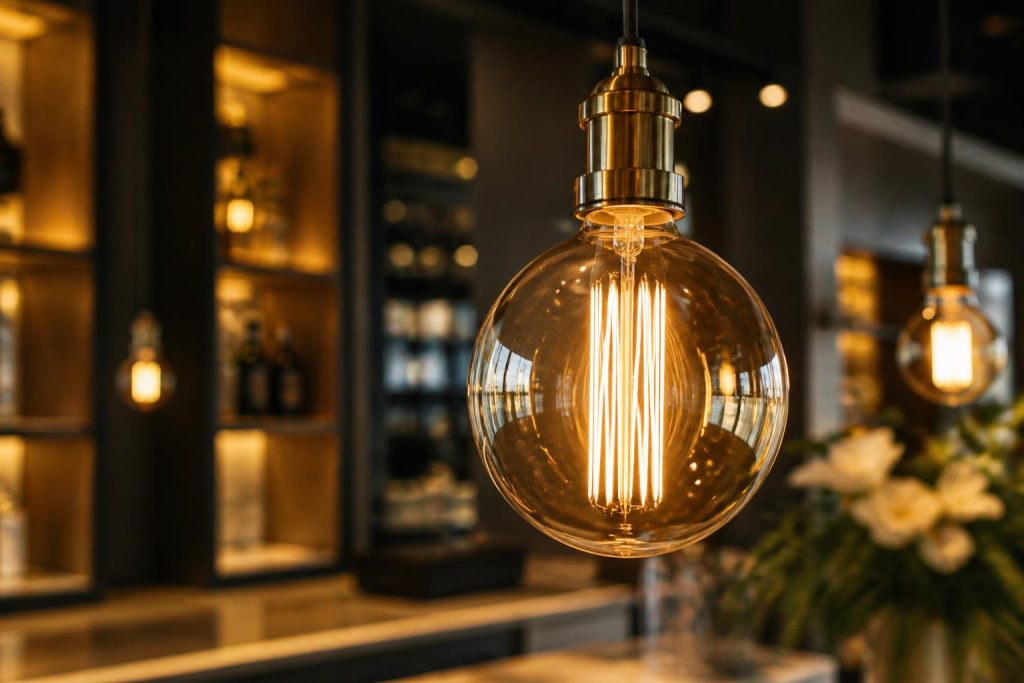
Most transparent option. Shows the filament and inner structure most directly, which works well when the bulb itself is meant to feel crisp and architectural.
Best for fixtures where the lamp shape and filament pattern are part of the design language.
Keeps the emitted look sharp and defined rather than softened.
A strong choice when the bulb is exposed and the brand wants a clean, modern presentation.
Adds a warmer, more decorative tone that can make the bulb feel inviting and vintage-leaning without changing the fixture itself.
Useful when the project needs a richer mood or a more hospitality-friendly atmosphere.
The tint softens the look while still leaving the filament visible.
A good fit for brands that want a warmer story and a more nostalgic visual cue.
Reduces direct view of the filament and gives the lamp a softer, more diffused appearance.
Useful when the bulb should feel calm, balanced, and less visually dominant in the fixture.
Helps blur the source and spread the visual emphasis more evenly.
Often chosen when brands want a versatile option that feels approachable across many interiors.
Creates a darker, moodier surface that frames the filament with more contrast and a more premium, contemporary feel.
Works especially well in statement fixtures where visual drama matters.
Softens brightness perception while preserving a clearly decorative look.
Best when the bulb should contribute to a darker, more curated atmosphere.
Common mistakes and practical fixes
04Avoid the finish mistakes that slow down OEM decisions
When decorative filament bulbs move from concept to production, the wrong glass finish can create avoidable problems: the bulb looks too bright in the fixture, the brand story feels inconsistent, or the chosen finish does not suit the way the product will be photographed, merchandised, or installed.
The safest approach is to treat finish selection as part visual design, part specification discipline. Start with the fixture and the viewing distance, then check how much of the filament should remain visible, and finally confirm whether the finish needs to support retail display, hospitality ambiance, or a more industrial editorial look.
Mistake 01
Choosing a finish only from a close-up sample
A finish that feels elegant in hand can read very differently once the bulb is installed in a pendant, pendant cluster, or open lamp body. Always review the bulb at actual scale and in the intended fixture family.
Mistake 02
Ignoring how the finish changes perceived brightness
Clear glass keeps the filament most visible, while warmer or darker finishes can soften the appearance and reduce visual punch. If the bulb is meant to be a feature, the finish should not over-dampen the effect.
Mistake 03
Using the same finish for every market or venue
Retail, hospitality, and residential projects often need different levels of glow and contrast. A finish that works for one channel may not be the best default for another.
Open fixtures usually benefit from a finish that controls glare and supports the visual composition.
If the filament is part of the brand story, keep enough clarity for the glow pattern to stay readable.
Finishes that photograph well on shelf do not always give the best result once they are hanging in a room.
For OEM programs, align the finish early so sourcing, merchandising, and project approvals stay consistent.
If you are preparing an OEM brief, compare the finish against your fixture, channel, and photography needs before you place the first order.
Request a quote05Buyer Questions
These answers help buyers choose the right glass finish for decorative LED filament bulb projects.
What does the glass finish change on an LED filament bulb?
The glass finish changes how visible the filament is, how soft or direct the bulb looks in the fixture, and how decorative it feels in the room. Clear glass gives the strongest filament visibility, while amber, frosted, and smoked finishes progressively shift the visual tone.
Which finish is best for a decorative bulb that should stand out?
Clear glass is usually the best choice when the filament design should stay visible and the bulb itself needs a crisp, classic decorative presence. It gives the most direct view of the inner structure and the strongest visual sparkle.
When should I choose amber, frosted, or smoked glass?
Choose amber for a warmer, more nostalgic look, frosted for a softer and calmer appearance with reduced glare, and smoked for a darker, more dramatic, premium-feeling presentation. The best option depends on the fixture, the viewing distance, and the brand story.
How should OEM buyers decide on the finish?
OEM buyers should start with the bulb’s visual role in the fixture, then check filament visibility, glare level, and how the finish will photograph and merchandise. Consistency across SKUs also matters when the goal is a recognizable product family.
Final CTA
06Ready to compare finishes with real samples?
Request finish samples, confirm the look in your fixture, and get OEM support for decorative bulbs, retail programs, or brand-specific glass options.
AromaLight Lighting can help you narrow the finish choice faster, with a clearer path from concept to quotation.

Looking for a Product, Not Just Information?
Explore AromaLight LED filament bulb models or send us your specifications, reference photos and OEM / ODM requirements.