
LED Filament Bulbs for Boutique Retail Displays: A Buyer’s Guide
Plan consistent LED filament bulb layouts for boutique retail displays with practical guidance on visibility, fixture rhythm, viewing distance, flicker, thermal context, aging tests, and batch release decisions.
← BACK TO JOURNAL01Plan the display as a complete lighting system
A boutique retail display is experienced as a whole: visible bulbs, fixture rhythm, viewing distance, operating hours, and visual comfort working together. A bulb that looks attractive on a sample board may feel inconsistent when repeated across a window, counter, pendant row, or open decorative fitting.
Start with the display goal, then test the light in context
First decide what the bulbs should do in the scene. They may create a warm visual rhythm across a row, draw attention to a merchandise zone, support the identity of a boutique, or remain a quiet layer behind the product. That goal determines how much bulb visibility, repetition, contrast, and brightness variation the layout can tolerate.
Next, evaluate the complete installation rather than the bulb appearance alone. Use the intended holder or fixture, the actual control equipment, and a realistic viewing position. Compare like-for-like samples at startup and after continuous operation, because a quick power-on check cannot show every change in brightness, driver behavior, connection quality, or filament condition.
System principle: visual consistency is a combined result of bulb behavior, fixture spacing, thermal context, and the time people spend looking at the display.
Four priorities to resolve first
- 01Bulb visibilityDecide whether the filament bulb is a focal detail, a repeated accent, or background atmosphere.
- 02Fixture rhythmReview spacing, alignment, and repetition so the display feels intentional rather than visually busy.
- 03Viewing distanceJudge glare, filament detail, and brightness from the distance at which shoppers and staff actually see the display.
- 04Long-run stabilityAsk how continuous aging is used to screen abnormal flicker, unstable brightness, intermittent operation, poor connections, and other early failures.
02Match the bulb layout to the merchandise role
Start with what the display needs the lamp to do. A visible bulb can establish rhythm and atmosphere, while a quieter position can leave the merchandise in control. Use the fixture, viewing distance, and operating pattern together rather than choosing spacing in isolation.
| Display role | Bulb visibility | Spacing & repetition | Position check |
|---|---|---|---|
| Open pendantsAtmosphere above a focused product zone. | Let the glass and filament read clearly, but keep the brightest visual emphasis away from eye level. | Repeat one silhouette and use an even cadence across the counter, island, or display table. | Check the bulb from customer approach paths and from the staff side of the fixture. |
| Shelf or counter displayAccent light close to merchandise. | Use the bulb as a small framing element; avoid allowing it to compete with labels, texture, or hero products. | Shorter runs need deliberate intervals so the shelf does not feel visually crowded. | Review reflections in glass, polished surfaces, and packaging at the normal viewing distance. |
| Clustered fittingsA decorative group that creates a focal point. | Consistency matters more than making every bulb a separate feature. Keep the cluster’s visual centre intentional. | Vary drop height only when the fixture supports it; keep bulb form and apparent scale coherent. | Confirm that overlapping lamps do not create accidental glare or hide the merchandise below. |
| Wall-facing displaysLight that supports a vertical presentation. | Position exposed lamps so their decorative detail is visible without pulling attention from the wall story. | Align repeated fittings with shelving, graphics, or product bays to create a calm vertical rhythm. | Test oblique views and nearby reflective finishes, not only the straight-on composition. |
Buyer rule set
Approve the layout as an operating scene, not as a sketch of empty sockets.
- 01 / VisibilityDecide whether the bulb is a product accent, a framing device, or background atmosphere before selecting its position.
- 02 / RhythmRepeat the same visual language across a run. Inconsistent spacing or mixed silhouettes can make a premium display feel accidental.
- 03 / Light stabilityFor long customer or staff exposure, compare the required standard or flicker-free behavior in the actual fixture and control setup.
- 04 / Heat contextReview the complete installation during sustained operation. In applicable bulb structures, inert gas can help move heat from the filament area toward the glass envelope, while the fixture and room complete the thermal path.
Quality evidence: a brief power-on check only confirms startup. Ask for continuous-operation observations that can expose abnormal flicker, unstable brightness, intermittent operation, poor connections, driver instability, or other early failures before shipment.
03Design the layout for comfort and clarity
Application composition
Let the bulbs establish rhythm—without taking attention from the collection.
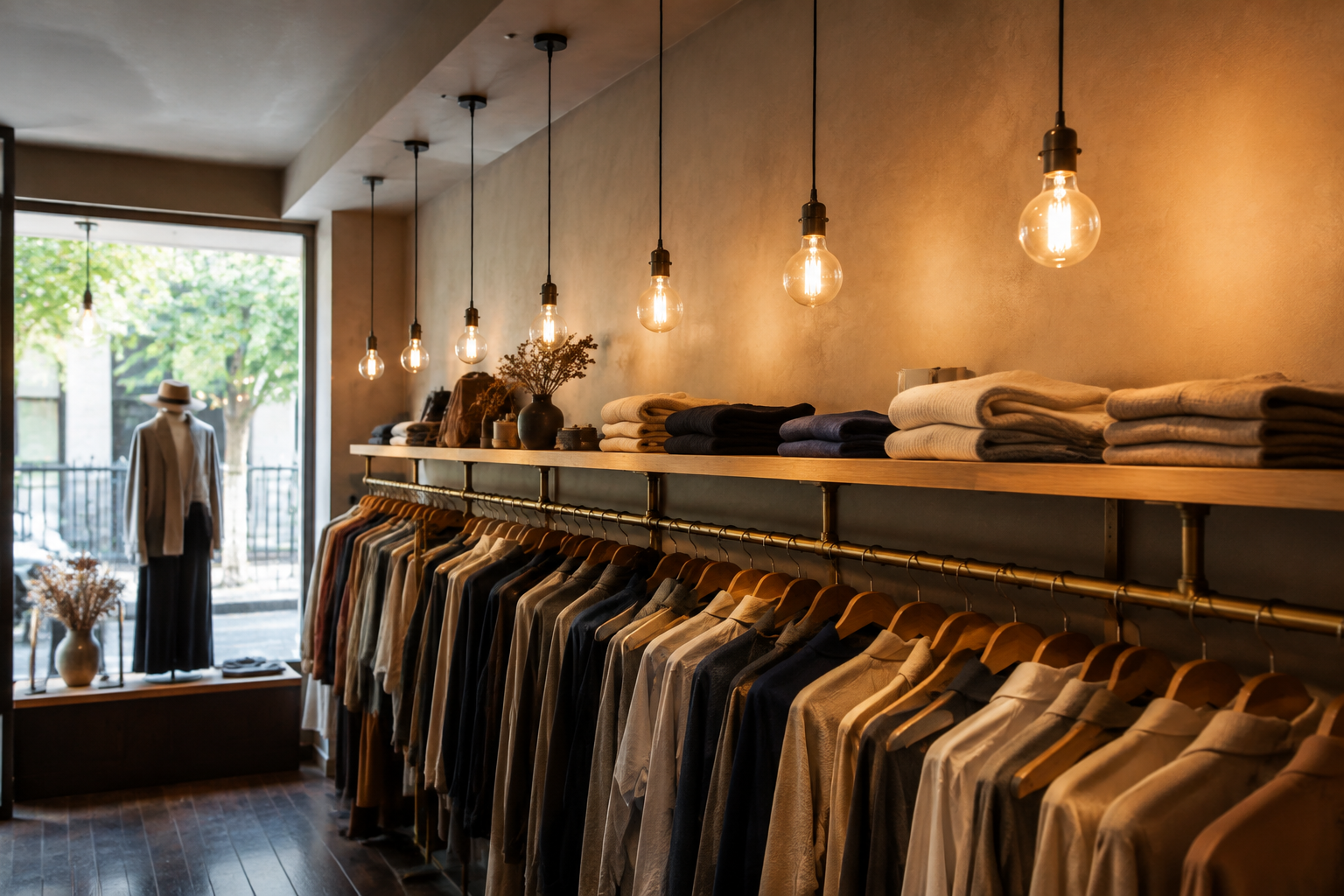
In a boutique window or shelving display, exposed LED filament bulbs work best when their spacing feels deliberate. Align the row with the merchandise zone, keep the visual repetition consistent, and judge the installation from the distance shoppers will actually experience it.
The bulb should provide a warm decorative layer while products remain easy to see. Avoid placing exposed lamps directly in the primary sightline or clustering them so tightly that reflections and glare become the main feature. A disciplined arrangement usually feels more premium than a brighter, more crowded one.
Light-stability observations
- Viewing distanceCheck the display from the customer approach, not only from beneath the fitting.
- Visual rhythmCompare spacing, bulb height, and filament orientation across the full row.
- Visual comfortFor long operating periods, consider a flicker-free version for more stable light output and reduced visible or measurable flicker.
- Continuous operationLook for brightness drift, abnormal flicker, interruptions, or connection problems after the lamps have been running.
In applicable bulb structures, inert gas can help transfer heat from the filament area toward the glass envelope, where it moves outward through the surface. Review that path alongside the driver, fixture enclosure, ambient conditions, and the intended operating pattern.
04Make light stability part of batch release
A bulb that illuminates immediately has passed the startup check—not the complete quality review. For a boutique retail display, use the approved fixture context and continuous operation to turn visual observations into a clear pre-shipment decision.
01 / Observe during installation and operation
Compare like-for-like samples in the intended holder, control setup, and display position. Record what changes after the lamp has been operating continuously.
Confirm that the bulb starts cleanly, produces light, and shows no immediate irregularity.
Compare brightness from startup through continuous running. Note drift, pulsing, or an inconsistent visual level.
Watch for abnormal flicker, changes after warm-up, interruptions, or visible irregular behaviour in the filament assembly.
Check for intermittent operation, poor electrical contact, restarts, or symptoms that follow the sample between suitable holders.
Review the complete bulb and fixture environment. In applicable structures, internal inert gas can help transfer heat from the filament area toward the glass envelope, where it moves outward.
02 / Pass, review, or hold
Observed behaviour matches the approved reference and the agreed light-stability requirement.
Repeat the comparison with the same fixture and control conditions. Separate expected product behaviour from a repeatable fault.
Quarantine affected samples when instability remains. Request the observations, sample identity, setup, and supplier disposition before release.
Keep the approved reference, operating conditions, observations, exceptions, and final batch decision with the order record.
Light-stability note
Standard LED filament bulbs may have some normal driver-related flicker; that alone does not automatically indicate a defect. Flicker-free versions use a driver solution designed for more stable output and reduced visible or measurable flicker. Select and assess the version against the visual-comfort requirement of the retail display, not against an undefined promise of “no flicker.”
Before approving the batch: ask for aging-test observations that cover electrical stability, light-output stability, driver performance, filament condition, abnormal flicker, unstable brightness, intermittent operation, poor connections, and early failures. Aging is a stability screen—not a guarantee of unlimited lifetime.
Discuss your sample approval05Application Questions
These answers help buyers connect bulb visibility, fixture rhythm, visual comfort, thermal context, and batch stability in boutique retail displays.
How should buyers evaluate LED filament bulbs for a boutique retail display?
Approve the bulb only after viewing it in the intended holder, fixture arrangement, control setup, and customer sightlines. Check whether the exposed filament supports the merchandise or competes with it, then review spacing, reflections, glare, brightness balance, and visual consistency across repeated fittings. A realistic installation test is more reliable than judging a bulb on a sample board.
When is a flicker-free version preferable in retail displays?
Choose a flicker-free LED filament version when shoppers or staff will remain under the display lighting for long periods or when visual comfort is a defined requirement. Standard versions may show some driver-related flicker as a normal characteristic, but flicker-free versions use a driver solution designed for more stable output and reduced visible or measurable flicker.
What quality evidence should a buyer request before batch release?
Continuous aging can reveal abnormal flicker, unstable brightness, intermittent operation, electrical failure, poor connections, driver instability, filament issues, and other early failures that a short startup check may miss. It is a pre-shipment stability screen, not a guarantee of unlimited lifetime. Buyers should retain the test conditions, sample identity, observations, exceptions, and batch release decision.
Why does thermal context matter for boutique display bulbs?
Review thermal behavior as part of the complete bulb and fixture system. In applicable LED filament bulb structures, internal inert gas can help transfer heat from the working filament area toward the glass envelope, where heat moves outward through the glass surface. Fixture enclosure, ambient conditions, airflow, driver behavior, and operating duration still determine the installation context.
How can retailers reduce glare and visual clutter from exposed filament bulbs?
Set the layout according to the merchandise role, viewing distance, and fixture rhythm before approving samples. Use repeated silhouettes and deliberate spacing for rows or clusters, keep exposed lamps away from primary sightlines where possible, and inspect reflections on glass, packaging, polished surfaces, and nearby finishes. The final decision should be based on the operating scene rather than empty sockets.
06Approve the layout before you release the batch
Buyer release checklist
A successful first glow is only the starting point. Before approving production, connect the visual layout with the fixture, the required light-stability level, the operating environment, and evidence that the assembled bulbs remain consistent over time.
-
Compare the approved layout in context
Use the intended holders, control equipment, viewing distance, and fixture arrangement. Check spacing, exposed filament appearance, brightness balance, and the way repeated bulbs sit around the merchandise.
-
Lock the light-stability requirement
State whether the project accepts the expected flicker characteristics of a standard LED filament bulb or requires a flicker-free version designed for more stable output and significantly reduced visible or measurable flicker. Compare like with like in the real fixture.
-
Review the complete thermal context
Judge the bulb during continuous operation, together with the fixture enclosure, ambient conditions, and airflow. The internal heat path is useful context, but it is not a standalone cooling guarantee.
-
Use aging observations before release
Ask for records from sustained operation, not only an instant power-on check. Aging can make abnormal flicker, unstable brightness, intermittent operation, electrical failure, poor connections, driver instability, and other early issues easier to identify before shipment.
-
Record the batch decision
Keep the approved layout, sample reference, fixture conditions, light-stability requirement, comparison result, aging observations, exceptions, and final hold, review, correction, or release decision with the order file.
Thermal path · continuous operation
Read heat as part of the complete system
In applicable LED filament bulb structures, heat begins around the working filament area and can move through the internal inert gas toward the glass envelope. The glass surface then transfers heat outward into the room.
- 01 · Filament area Localized heat begins here while the bulb is operating.
- 02 · Internal gas, where applicable Can participate in transferring heat toward the bulb wall.
- 03 · Glass envelope Moves heat outward through its surface.
- 04 · Fixture and room Ambient conditions and airflow complete the operating context.
Treat this as one part of the thermal path, alongside driver behavior and installation conditions. It explains how heat may move; it does not promise unlimited lifetime or guarantee suitable cooling in every fixture.
Make the release record visible
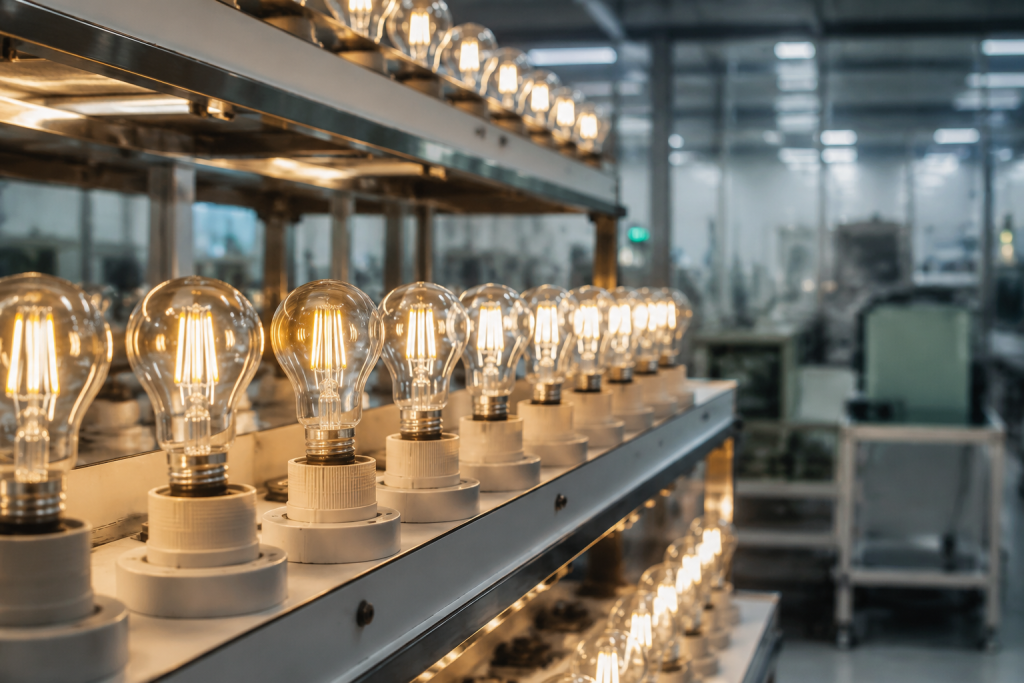
Document the approved layout, fixture context, light-stability requirement, comparison sample, and aging observations before batch release. A clear record turns visual approval into a controlled procurement decision.

Looking for a Product, Not Just Information?
Explore AromaLight LED filament bulb models or send us your specifications, reference photos and OEM / ODM requirements.