
Decorative LED Filament Bulbs for Hotel Guestrooms and Lobbies
Learn how to plan decorative LED filament bulbs for hotel guestrooms and lobbies, balancing atmosphere, visual comfort, fixture context, light stability, and pre-shipment quality checks.
← BACK TO JOURNAL01Plan the decorative layer before you choose the bulb
Decorative LED filament bulbs should shape the mood without carrying the entire lighting load. Start by defining the role they play in each hotel setting, then review comfort, fixture context, and consistency as part of the complete lighting system.
Make the room feel settled, not overlit
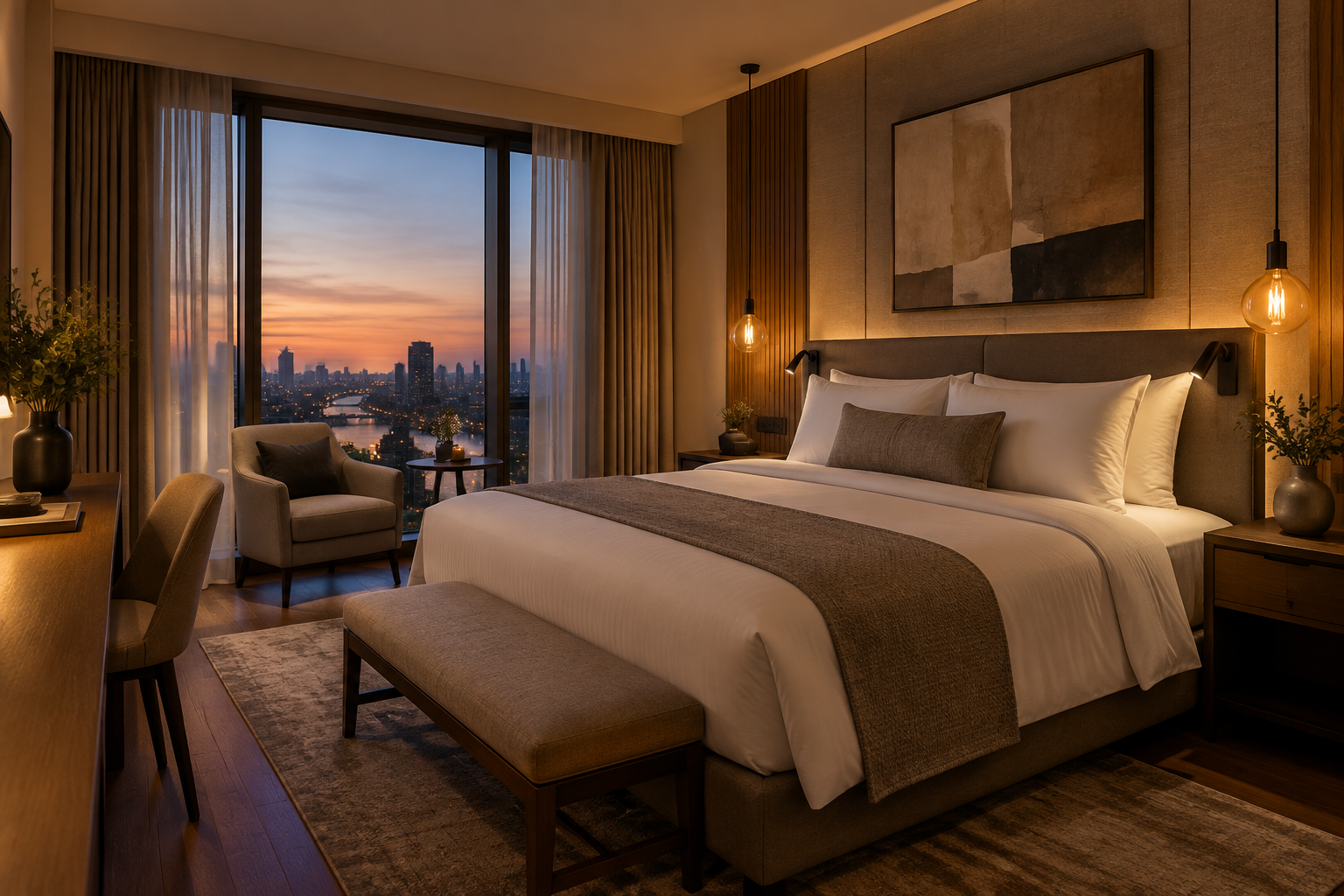
In a guestroom, the decorative bulb can add warmth around a bedside pendant, reading corner, desk, or vanity. Its purpose is to create a reassuring layer of atmosphere while task and general lighting keep the room usable.
Planning lens: consider where guests will look for long periods, how close the exposed bulb sits to the eye, and whether a flicker-free version better supports visual comfort.
02 / LOBBIESUse repetition to guide arrival
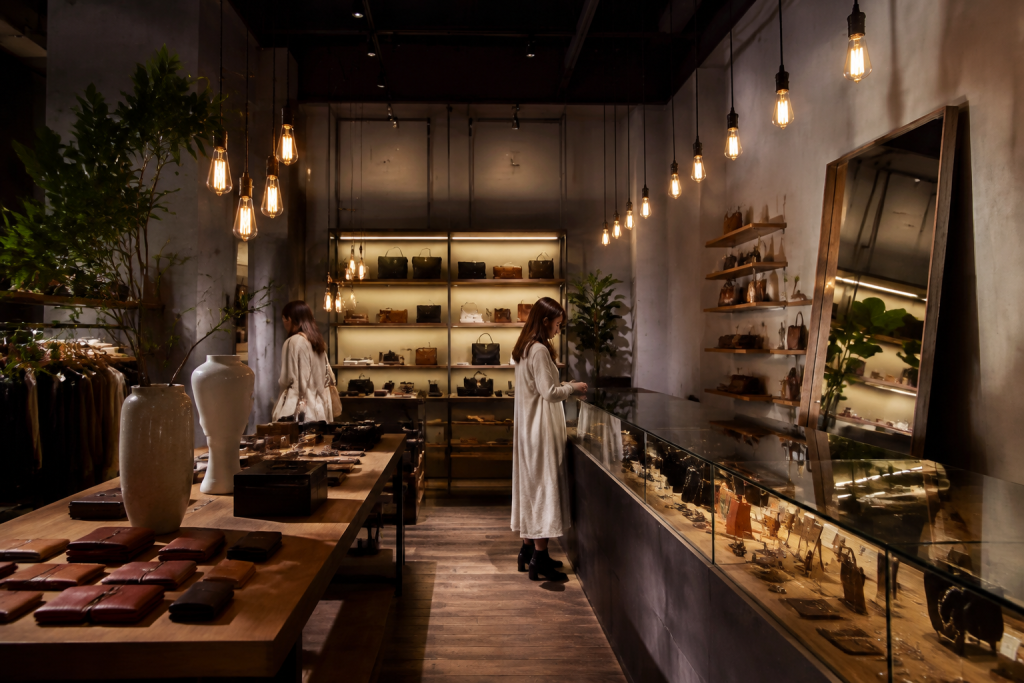
In a lobby, decorative bulbs can establish rhythm across pendants, reception features, lounge zones, or circulation routes. They may support wayfinding and identity, but should work with the architectural and ambient layers rather than become the only source of illumination.
Planning lens: assess spacing, viewing distance, reflections, operating hours, and the visual consistency of the complete fixture group.
Before requesting samples
Mark the decorative role, viewing distance, operating schedule, and intended fixture for each zone. Then compare samples in that context and ask how continuous operation and pre-shipment aging observations are used to review brightness stability, abnormal flicker, connections, and other early issues. Discuss your project brief
02Keep the decorative layer restful—and let task light do the practical work
Guestroom planning principle
An exposed LED filament bulb can make a bedside pendant feel warm and considered, but it should not be asked to carry every visual task in the room. Build the guestroom as a layered scene: decorative light for atmosphere, a discreet reading light for practical use, and enough glare control that the bulb remains inviting rather than intrusive.
Place the glow beside—not across—the guest’s sightline
Use a pendant or wall-mounted fitting where the filament is visible as a design detail, while the shade, mounting height, and viewing angle keep the brightest part away from direct eye level.
Separate reading light from ambient mood
A dedicated reading layer lets guests adjust practical illumination without making the decorative bulb overly bright. This keeps the room calm when the bed is used for resting, conversation, or winding down.
Specify visual stability for long stays
Standard LED filament bulbs may have some driver-related flicker as a normal characteristic. Where guests spend longer periods under the light, compare a flicker-free version for more stable output and reduced visible or measurable flicker.
Judge heat in the complete installation
During operation, heat begins around the filament area. In applicable structures, inert gas can help transfer it toward the glass envelope, where heat moves outward through the surface. The fixture and room still complete the thermal context.
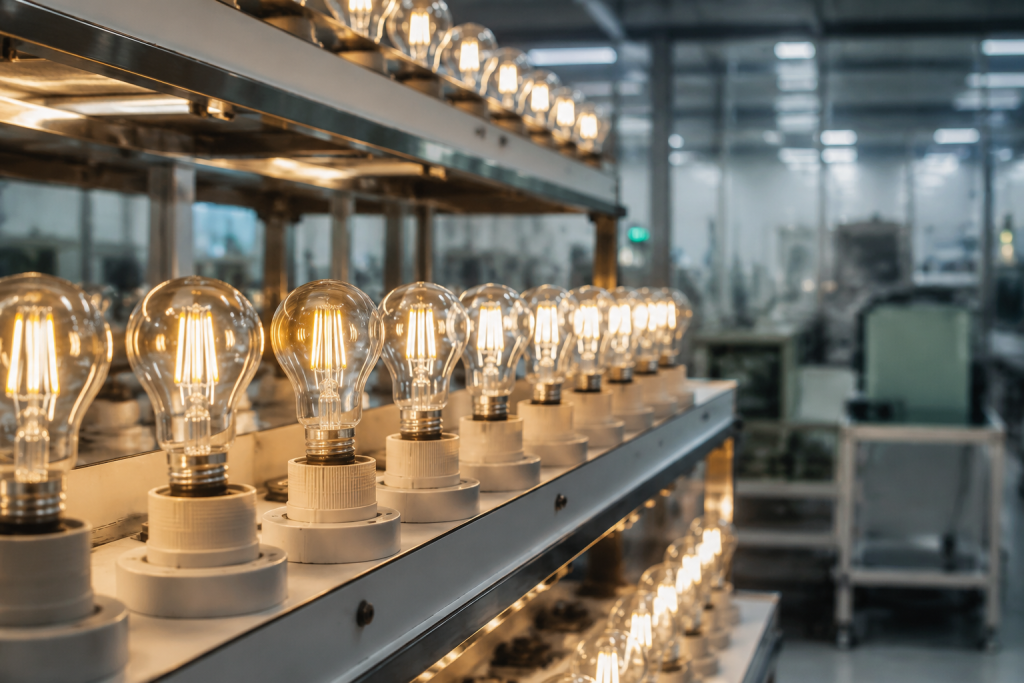
Review the bulb, holder, control equipment, mounting position, viewing distance, and operating pattern together. A quick power-on check can confirm that the lamp starts, but continuous operation is more useful for observing brightness stability, driver behavior, connections, and early irregularities.
03Build the lobby in layers, not with the bulb alone
FROM ARRIVAL TO SEATING
Let decorative filament bulbs shape the welcome—then assign each zone its own job.
A lobby is read in a few seconds, but it is occupied for much longer. Use visible LED filament bulbs to establish arrival character, fixture rhythm, and a warmer sense of place. They should support the architecture and furniture rather than carry every visual task.
At reception, guests need clear faces, documents, and wayfinding. Around seating, they need a restful atmosphere without exposed lamps becoming the brightest point in view. Keep those practical requirements in a separate supporting light layer, such as concealed, task, or general ambient lighting.
For long operating periods and guest-facing views, compare the selected bulb in its actual fixture and control setup. A flicker-free version is worth considering when visual comfort is a higher project requirement; standard versions can have driver-related flicker that is not automatically a defect.
Lobby role / planning response
04Specify light stability for long-stay hotel spaces
Standard LED Filament Bulb
A practical starting point when the project has basic decorative-lighting requirements.
This can be a normal characteristic of the driver and electrical design; flicker alone does not automatically mean the bulb is defective.
Review whether guests or staff will remain under the decorative light for long periods, especially in guestrooms, reception zones, or seating areas.
It may suit a decorative layer when the bulb is not the only light source and the visual-comfort requirement is modest.
Compare samples in the intended fixture, supply, control setup, and viewing position. Include continuous-operation observations before batch approval.
Flicker-Free Version
A considered direction when stable light output matters to the guest experience.
Its driver solution is designed to significantly reduce visible or measurable flicker compared with a standard version.
Consider this direction where people spend extended periods beneath the light or where a calmer visual impression is important.
Useful to shortlist for bedside or lounge ambience, reception areas, restaurants, and other long-duration hospitality applications.
Test the sample in the intended fixture and control setup, then observe startup, brightness stability, and continuous running before release.
Make light stability a project decision
Standard bulbs may have some driver-related flicker as a normal characteristic. Flicker-free versions use a driver solution designed for more stable output and significantly reduced visible or measurable flicker. Neither label replaces an application test.
For guestrooms, lobbies, and other spaces used for long periods, define the visual-comfort requirement first. Then compare like-for-like samples in the intended fixture, control setup, and viewing conditions. Ask for continuous-operation observations as part of the pre-shipment review; aging helps identify early instability, but it is not a guarantee of unlimited lifetime.
05Turn long-run operation into a practical release check
A decorative bulb that lights immediately has passed a useful startup check, but hotel lamps may operate for long guestroom evenings and extended lobby schedules. Thermal behavior and aging observations give buyers a clearer view of how the assembled bulb behaves beyond its first glow.
Filament area
Localized heat begins around the working filament area while the bulb is operating.
Internal gas, where applicable
In applicable bulb structures, inert gas can help transfer heat toward the glass envelope.
Glass envelope
The glass receives heat and releases it through its surface toward the surrounding space.
Room and fixture
Fixture geometry, ambient conditions, and airflow complete the thermal operating context.
Read the path as a system. Inert gas is one part of the thermal route, not a standalone cooling guarantee. Review the complete bulb, driver, fixture, and room conditions together.
Pre-shipment review
What the aging check should help you observe
Continuous operation creates a longer observation window than an instant power-on inspection. It can help a quality team identify early instability before a batch is released, without turning the test into an unsupported lifetime promise.
Abnormal flicker
Compare the observed behavior with the approved standard or flicker-free requirement. Flicker alone does not automatically mean a standard bulb is defective.
Unstable brightness
Watch for brightness drift or inconsistent output after the bulb has been operating, rather than relying only on the first visual impression.
Intermittent operation
Record cut-outs, restarts, or irregular operation and compare them under the same holder, supply, control gear, and fixture conditions.
Electrical failure
Separate any unit that stops operating or develops an early electrical fault during the screening process.
Poor connections
Investigate intermittent symptoms that may point to an unreliable internal or assembly connection.
Driver instability
Review output changes, interruptions, or other behavior that becomes clearer as the driver operates and warms.
Filament condition
Inspect the visible filament area for changes or irregular operating behavior during the run.
Batch evidence
Keep the sample identity, setup, observations, exceptions, and final hold, review, or release decision with the order record.
Quality-control boundary
Aging testing is a screen for operating stability and potential early failures. It strengthens pre-shipment review, but it does not guarantee unlimited lifetime. Use it alongside the approved light-stability requirement and the actual hotel fixture context.
Before shipment, request the agreed aging conditions, monitored observations, sample or batch reference, and disposition record. Compare the approved sample and production units like for like.
Discuss a pre-shipment review06Application Questions
These answers connect decorative bulb placement with guest comfort, layered lighting, visual stability, and pre-shipment review.
How should decorative LED filament bulbs be used in hotel guestrooms?
Use decorative LED filament bulbs as an atmospheric layer, not as the sole source of guestroom illumination. They can add warmth around bedside pendants, reading corners, desks, and vanities, while separate reading and general lighting provide practical visibility. Review sightlines, glare, fixture position, and viewing distance before approving the installation.
How can decorative LED filament bulbs support a hotel lobby design?
Use decorative LED filament bulbs in lobbies to create visual rhythm and support arrival character, reception features, seating zones, and circulation routes. Keep reception visibility, wayfinding, and practical tasks in a separate supporting layer. Compare repeated fixtures for spacing, reflections, viewing distance, operating hours, and consistent appearance.
When is a flicker-free LED filament bulb preferable for hospitality spaces?
Choose a flicker-free version when guests or staff will remain under the light for extended periods or when visual comfort is a higher project requirement. Standard LED filament bulbs may show some driver-related flicker as a normal characteristic. Test the selected version in the intended fixture and control setup before release.
What quality checks should buyers request before approving hotel bulb samples?
Use continuous-operation aging as a pre-shipment stability screen rather than relying only on startup. It can help reveal abnormal flicker, brightness instability, intermittent operation, electrical failure, poor connections, driver instability, filament issues, and other early problems. Retain the sample identity, test conditions, observations, exceptions, and batch disposition.
Hospitality sampling becomes easier to control when the visual idea is translated into decisions, observations, and a clear release record. Use this brief before approving a decorative LED filament bulb for guestrooms, lobbies, or both.
07Turn the concept into a controlled buying brief
Decisions for the design and purchasing brief
- 01Fixture type and guest role
State whether the bulb will be exposed in a pendant, sconce, chandelier, or another decorative fitting. Separate the guestroom atmosphere role from the lobby arrival, reception, seating, or circulation role.
- 02Viewing distance and visual emphasis
Record where guests will see the lamp, whether the filament should read as a focal detail or background rhythm, and which sightlines need protection from glare.
- 03Control and light-stability context
Identify the switch, dimmer, or control path used in the intended fixture. Note whether the project requires a standard version or a flicker-free option for longer viewing periods and higher visual-comfort expectations.
- 04Approved appearance and operating pattern
Define the reference appearance, repetition across the installation, expected continuous-operation pattern, and the conditions under which the sample will be judged.
Evidence for the batch decision
- 01Like-for-like sample comparison
Ask for the sample identity, intended fixture, control equipment, supply conditions, viewing position, and approved appearance used for comparison.
- 02Continuous-operation observations
Request records covering electrical stability, brightness consistency, driver behavior, filament condition, abnormal flicker, interruptions, poor connections, and other early irregularities.
- 03Thermal context
Review the assembled bulb in its fixture. Where applicable, inert gas can help transfer heat from the filament area toward the glass envelope; the fixture and room complete the operating context.
- 04Batch disposition
Agree how evidence is recorded and whether the batch is released, held for investigation, corrected, or compared again against the approved reference.
Retain the accepted sample, fixture context, viewing distance, and selected light-stability requirement.
Use aging observations as a screen for operating stability and early failures, not as a guarantee of unlimited lifetime.
Make the batch decision visible, linked to the sample reference, test conditions, exceptions, and final approval.
Practical boundary: a bulb that lights during a brief power-on check has passed only the first observation. For a hotel project, compare the selected version in the intended fixture and use continuous-operation evidence to support the purchasing decision.
Preparing a guestroom or lobby program? Share the fixture type, application role, viewing conditions, control context, and required light-stability level for a focused sampling or specification review.
Request a project review
Looking for a Product, Not Just Information?
Explore AromaLight LED filament bulb models or send us your specifications, reference photos and OEM / ODM requirements.