
LED Filament Bulb Troubleshooting: Diagnose Flicker and No-Start Samples
Learn how to troubleshoot flickering, unstable, intermittent, or non-starting LED filament bulb samples with controlled tests, fixture checks, and aging-test evidence.
← BACK TO JOURNAL01Start with the symptom, not the verdict
A practical first pass
A flickering or silent sample is a signal to investigate.
Before rejecting an LED filament bulb, reproduce the report in a known electrical setup and identify exactly what the lamp is doing. Standard filament bulbs may have some flicker as a normal characteristic of their driver and electrical design; a flicker-free version is designed for more stable light output and reduced visible or measurable flicker. The first diagnosis should therefore separate product behavior from a setup issue, a compatibility issue, or an early failure.
Keep the first test controlled
Use the same sample, holder, supply conditions, control gear, and observation point when comparing results.
- Record Product version and sample reference
- Reproduce The reported symptom more than once
- Compare With a known-good sample in the same setup
Map the symptom before choosing the next test
One symptom can have more than one cause.
01 · Light stability
Flicker during operation
First confirm whether the sample is a standard or flicker-free version. Then check the driver behavior, electrical setup, dimmer or control gear, and whether the effect changes after the bulb warms up.
02 · Output change
Brightness feels unstable
Look for visible drift, pulsing, or a change after continuous running. Record when it starts and compare the same lamp with a reference sample before treating the symptom as a product defect.
03 · Interruption
Intermittent operation
Note whether the lamp cuts out after warm-up, returns after cycling power, or responds to movement at the holder. This points the investigation toward connections, driver stability, fixture conditions, or an early failure.
04 · Startup
Fails to start
Check the holder contact, supply and control path, then try a known-good bulb in the same position. If the symptom follows the sample under controlled conditions, preserve it for further review rather than discarding it.
Next diagnostic step
Build a short test record for each sample: symptom, setup, timing, comparison result, and product version. Once the symptom is classified, move to continuous operation and batch-level evidence; aging tests can reveal abnormal flicker, unstable brightness, intermittent operation, poor connections, and other early failures that an instant power-on check may miss.
02Separate the installation from the bulb
Start outside the lamp
Trace the electrical path before opening a defect claim
A flickering or non-starting sample is not automatically a failed bulb. The driver may have a normal flicker characteristic, while the fixture, control device, wiring, or lamp holder can also change what the sample does in service. Recreate the intended installation and isolate one variable at a time.
- Lamp holder and contactCheck that the bulb is seated correctly and that the holder is clean, secure, and making consistent contact. A loose connection can look like an intermittent lamp fault.
- Switch and wiring pathConfirm the circuit is complete and inspect for loose terminations, unusual switching arrangements, or other wiring conditions that could interrupt supply to the bulb.
- Dimmer or control gearRemove the dimmer or control device for a controlled comparison, then test compatibility separately. A bulb that starts on direct supply but misbehaves through a control may need a system-level review.
- Fixture contextRepeat the check in the intended pendant, sconce, or decorative fitting. Enclosure, heat, operating duration, and the surrounding installation can affect stability after the bulb has warmed up.
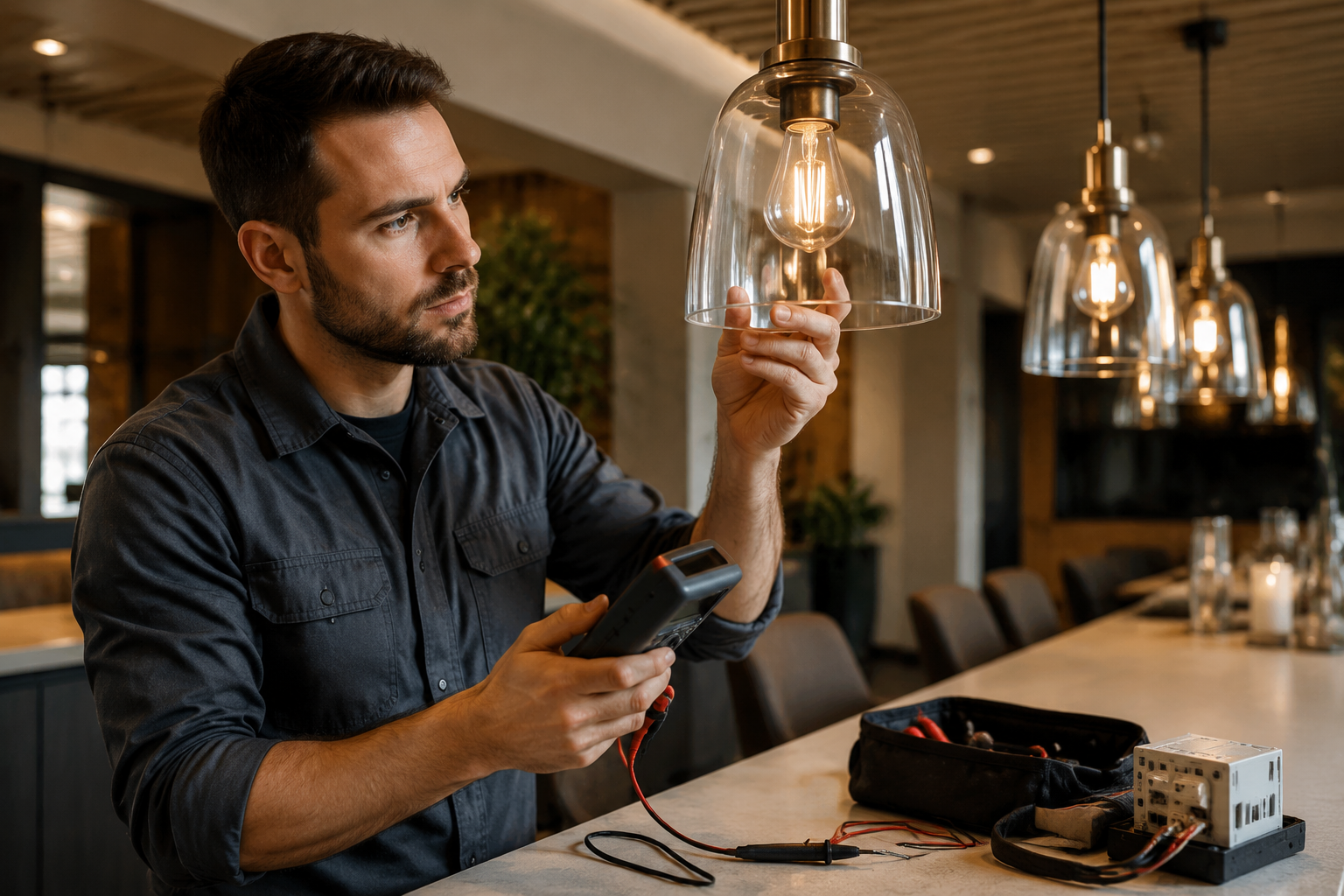
Inspection sequence
Stop when the evidence points inside the bulb
- Reproduce the symptomNote whether the sample flickers, fails to start, operates intermittently, or changes brightness after warming.
- Bypass external variablesUse a known-good holder and a controlled direct-power setup before judging the sample itself.
- Compare samplesRun the same fixture and control conditions with a reference sample. Keep the comparison fair and repeatable.
- Observe continuous operationShort power-on proves only that the lamp starts. Continued operation can reveal unstable brightness, driver behavior, poor connection, or early failure.
Stop and escalateIf the symptom remains under controlled supply, a known-good holder, and repeat testing, quarantine the sample and send the recorded conditions to the supplier. Request root-cause review and batch-level evidence before approval. Aging testing is a screening step for early instability, not a guarantee of unlimited life.
03Choose the light-stability level for the application
A flickering sample is not automatically a defective sample. Standard and flicker-free LED filament bulbs can be built with different driver and electrical designs, so the right comparison starts with the visual-comfort requirement of the installation.
Standard version
Acceptable when the requirement is basic decorative light
Standard LED filament bulbs may show some flicker as a normal characteristic of their driver and electrical design. That behaviour alone does not prove a production fault.
Typical decisionConsider it when the project has modest visual-comfort requirements and the bulb is primarily a decorative light source.
Buyer checkCompare startup, brightness stability, and operation in the intended fixture and control setup.
Escalate whenFlicker is accompanied by unstable brightness, intermittent operation, electrical failure, or poor connection behaviour.
A quick power-on result is only an initial screen; continuous operation can reveal early instability that needs review.
Flicker-free version
Consider it when stable visual output matters more
Flicker-free LED filament bulbs use a driver solution designed for more stable light output and significantly reduced visible or measurable flicker.
Typical decisionShortlist it for homes, hotels, restaurants, offices, retail spaces, and hospitality projects with higher visual-comfort expectations.
What it addsA calmer visual experience during long operating periods, especially where guests, staff, or merchandise remain under the light.
Buyer checkVerify the actual fixture, dimmer or control equipment, operating pattern, and any measured flicker requirement before approval.
“Flicker-free” describes a driver approach for reduced flicker; it is not a promise of unlimited reliability or universal compatibility.
Buyer decision strip
Match the specification to the time people spend under the light.
For short decorative use, a standard version may be suitable. For long viewing periods or comfort-led projects, request a flicker-free sample and compare both versions in the real fixture before locking the batch requirement.
04A controlled sequence for flicker and no-start samples
A sample that flickers, starts intermittently, or stays dark needs a controlled recheck before it is labelled defective. Follow the same sequence for every unit, record what changes, and separate a repeatable bulb issue from a setup-dependent symptom.
-
Confirm the symptom
Describe exactly what happens
Record whether the bulb flickers during operation, changes brightness, starts only sometimes, or fails to illuminate at all. Note when the symptom appears: at startup, after warming up, during continuous operation, or only after repeated switching.
-
Remove the obvious variable
Use a known suitable test setup
Move the sample into a suitable lamp holder and a controlled electrical setup known to work with the bulb. Do not use an unverified dimmer, control device, loose connection, or questionable fixture as the only basis for a product judgement.
- Keep the holder, wiring path, and control equipment consistent while comparing samples.
- Record the setup used so the supplier can reproduce the observation.
Some standard LED filament bulbs may have a certain level of flicker as a normal characteristic of their driver and electrical design. Flicker alone does not prove a defect. First establish whether the behaviour is expected for the selected light-stability level and whether it repeats in a suitable setup.
-
Repeat and observe
Compare repeated starts with continuous operation
Switch the sample on and off repeatedly, then leave it operating continuously while observing startup, brightness stability, flicker, and interruptions. Compare the same checks across more than one sample where available. A bulb that lights once may still reveal an early stability issue during sustained operation.
-
Make the quality decision
Isolate a repeatable issue for supplier review
If the symptom remains in the controlled setup, keep the sample separate from approved units and document the evidence. Include the sample reference, test arrangement, startup observations, continuous-operation result, and any comparison sample used.
Turn one troubling sample into a batch-control question
Ask the supplier to review the sample and the relevant production context before batch approval. Continuous aging is useful because it can expose abnormal flicker, unstable brightness, intermittent operation, electrical failure, poor connections, driver instability, and other early failures that a quick power-on check may miss. It is a screening step for operating stability, not a guarantee of unlimited life.
- Hold the affected sample and do not mix it with approved references.
- Share repeatable observations and the exact setup used.
- Request a root-cause review and batch-level disposition before release.
Thermal path · continuous operation · quality control
05Read continuous operation as a thermal and reliability check
Why a quick power-on check can look reassuring
A sample may illuminate normally at the bench and still develop abnormal flicker, unstable brightness, intermittent operation, or an electrical fault after it has been running continuously. The short check confirms startup; it does not show how the complete lamp behaves as heat and operating time build.
In applicable LED filament bulb structures, heat begins around the working filament, can move through the internal inert gas toward the glass envelope, and then leaves through the glass surface into the surrounding room. That gas is one part of the thermal path—not a substitute for stable driver behavior or a suitable fixture environment.
Continuous aging gives the production team a better opportunity to observe electrical stability, light output, driver performance, filament condition, and connection quality before shipment. It is a screening step for early failures, not a promise of unlimited service life.
A simple heat path
Buyer lens: judge thermal behavior and light stability in the intended fixture, not only during the first glow.
What continuous aging can reveal
Compare the lamp’s output from startup through continuous operation rather than relying on one instant observation.
Watch for abnormal flicker, irregular operation, shutdowns, or other changes that become clearer after the lamp has warmed.
Intermittent operation, poor electrical connections, and other early failures may be easier to identify before the batch is released.
Ask for the aging-test observations, repeat the sample in the intended electrical and fixture context, then use the results as a batch-release gate—not as a substitute for a defined quality review.
06Quick Technical Answers
Use these troubleshooting answers to separate expected flicker, installation variables, compatibility issues and repeatable bulb failures.
How should I begin troubleshooting a flickering LED filament bulb?
Begin LED filament bulb troubleshooting by reproducing the symptom in a controlled, known electrical setup. Use a suitable holder, consistent supply and control path, then compare the sample with a known-good bulb under identical conditions. Record whether flicker, brightness changes, intermittent operation or no-start behavior occurs at startup, after warm-up or during continuous operation.
What should I check when an LED filament bulb fails to start?
A no-start or intermittent LED filament bulb can be affected by holder contact, wiring, switching equipment, dimmers, fixture conditions, driver behavior, connections or an early product failure. Check the holder and supply first, bypass external control devices for comparison, and test a known-good bulb in the same position. If the symptom follows the sample, quarantine it for review.
Does flicker automatically mean an LED filament bulb is defective?
Some standard LED filament bulbs may show a certain level of flicker as a normal characteristic of their driver and electrical design. Flicker alone does not prove a defect. Treat the issue as higher priority when it occurs with unstable brightness, interruptions, electrical failure or poor connection behavior, or when it remains in a controlled setup.
Why is continuous aging useful in LED filament bulb troubleshooting?
Continuous aging helps reveal abnormal flicker, unstable brightness, intermittent operation, electrical failure, poor connections, driver instability and other early problems that a brief power-on check may miss. It provides evidence about operating stability before shipment or batch approval, but passing an aging test does not guarantee unlimited service life.
What information should I include in a supplier review for an unstable sample?
Send the supplier the exact symptom, sample reference, holder and fixture details, supply and control conditions, operating timing, comparison results and required light-stability level. Explain whether the bulb flickers, changes brightness, operates intermittently or fails to start. Request controlled retesting, root-cause review and batch-level disposition before approving affected production.
07Turn a failed sample into a useful supplier review
A flickering or no-start sample is most valuable when the observation is specific enough to reproduce. Send the supplier a controlled description first, then ask for a structured review before making a batch decision.
Buyer handoff
Information to send with the sample diagnosis
A clear record helps separate a bulb issue from the fixture, control setup, or operating environment.
- Exact symptomState whether the sample flickers, shows unstable brightness, runs intermittently, or fails to start. Note when the behavior appears.
- Fixture and control setupIdentify the lamp holder, fixture type, switch, wiring path, dimmer, or other control equipment used during the test.
- Operating contextRecord the installation environment, expected operating pattern, and whether the sample was observed only at startup or during continuous operation.
- Comparison observationsExplain whether another sample behaves differently in the same setup. Keep the comparison conditions as consistent as possible.
- Required light stabilityTell the supplier whether the project accepts the normal characteristics of a standard version or requires a flicker-free solution for greater visual comfort.
Supplier review request
Ask for these checks before batch approval
The purpose is to identify the mechanism and confirm operating stability—not to assign blame from one symptom alone.
- Driver behaviorAsk whether the driver remains electrically stable under the reported setup and during continuous operation.
- Connections and assemblyRequest a review of poor electrical connections, intermittent paths, and assembly-related causes of no-start or unstable operation.
- Filament conditionAsk the supplier to inspect the filament assembly for visible or operational irregularities that could explain the symptom.
- Electrical stabilityHave the sample checked in a suitable controlled environment, with startup and sustained light-output behavior recorded.
- Aging-test observationsAsk what continuous operation revealed about flicker, brightness stability, intermittent operation, driver performance, and early failures.
Need help interpreting an unstable sample or preparing a pre-shipment review? Share the symptom, test setup, operating context, and comparison notes with AromaLight for a focused troubleshooting discussion.
Start a sample review

Looking for a Product, Not Just Information?
Explore AromaLight LED filament bulb models or send us your specifications, reference photos and OEM / ODM requirements.